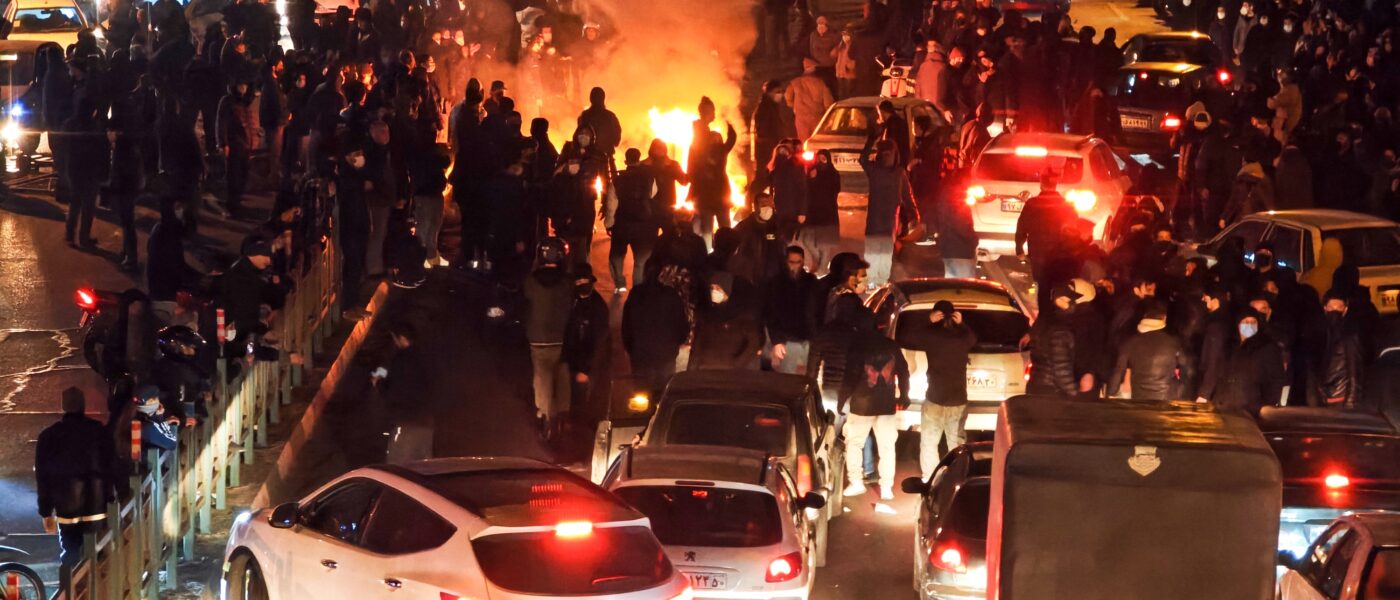
As of Thursday, a staggering 92 million Iranians are facing a complete internet blackout—marking one of the longest nationwide shutdowns in history, according to experts.
Just last Thursday, Iran’s government made a drastic move, cutting off internet and phone access across the nation in response to significant anti-government protests that ignited late last year. This action has led to a severe crackdown from authorities, raising serious concerns about human rights and freedom of expression.
At the moment, Iranians have been deprived of internet access for over 170 hours. This surpasses the previous records of 163 hours in 2019 and 160 hours in 2025. Isik Mater, the director of research at NetBlocks, a reputable web monitoring organization, emphasizes that this ongoing shutdown is one of the most comprehensive we’ve seen, impacting a large segment of the population.
Mater also observes that the current shutdown is the third longest documented globally, trailing only behind the internet blackout in Sudan in mid-2021, which lasted around 35 days, and Mauritania’s outage in July 2024 at 22 days.
“Iran’s shutdowns are among the most extensive and strictly enforced we’ve observed,” he shared with TechCrunch. The classification of the shutdown’s duration may differ based on the metrics used by various organizations.
According to Zach Rosson, a researcher at Access Now, the ongoing shutdown in Iran is on track to enter the top 10 longest internet disruptions in history.
Historically, Iran has a notorious reputation for shutting down internet access during times of civil unrest. This tactic complicates the ability for international observers to monitor protests and the government’s response.
A U.S.-based human rights organization estimates that there have been over 600 protests across various cities in Iran. Tragically, the Iranian government’s violent response has resulted in the deaths of at least 2,000 individuals.
The shutdown initiated on January 8 was abrupt, severing internet access even for government entities. While some governmental departments and sectors like banking have regained partial access, many citizens remain in the dark.
Interestingly, a small group of Iranians has managed to connect to the internet through Starlink terminals smuggled into the country. In 2022, the Biden administration even allowed U.S. tech companies to provide free connectivity to Iranians, enabling Starlink’s operation within the nation.
However, the Iranian authorities have responded harshly, making it illegal to possess a Starlink terminal and even jamming signals in certain neighborhoods.
This week, former President Donald Trump issued a warning about potential military intervention if violence continues. In the midst of this, the U.S. military has redirected naval forces towards the Middle East due to rising tensions.
On a more hopeful note, Trump claimed he received information suggesting that the violence may have ceased, although uncertainty remains.
Meanwhile, the United Kingdom has temporarily closed its embassy in Tehran, evacuating its personnel, and Iran has restricted its airspace—a concerning development as the situation continues to evolve.